
 Photoshop
 Maya
Maya ZBrush
 Houdini
 Unreal Engine
 Substance Painter
 Blender
 Arnold
 Nuke
Nuke KeyShot
 V-Ray
V-Ray Marmoset Toolbag
 Substance Designer
 Mari
Mari Marvelous Designer
 3ds Max
 3DCoat
 Redshift
 After Effects
 Faceform Wrap
 Lightroom
 OctaneRender
 SpeedTree
 Daz 3D
 Agisoft Metashape
 Fusion
 Modo
Modo RealityCapture
 Gaea
Gaea Cinema 4D
 Gravity Sketch
 Premiere
 Procreate
 Clip Studio Paint
 SketchUp
 SketchBook
 Katana
 Krita
Krita Natron
 Mudbox
 Quixel Bridge
 Quixel Megascans
 Quixel Mixer
 Substance 3D Modeler
 World Creator
 Yeti
Yeti Ziva VFX
 Mixamo
 Adobe Medium
 Quixel DDO
 Meshmixer
 Storyboard Pro
 DaVinci Resolve
 TreeIt
 Gaffer
 Corel Painter
 World Machine
 SynthEyes
 Massive
 Materialize
 Unity
Unity Ornatrix
 PreForm
 Moi 3D
 animBot
 QuickTime
 ReCap
ReCap xNormal







The third and final volume of Eric Keller’s Introduction to Maya 2026 workshop series focuses on texturing, shading, animation, lighting, and rendering. The 20 videos in this volume are designed to help artists get up and running quickly as they learn Autodesk Maya.
Volume 3 starts with an overview of the UV Toolkit, using the cappuccino machine model created in Volume 2 as an example. Eric takes artists on a tour of Hypershade, looking at Maya's Texturing and Shading interface, and demonstrating how to build materials for rendering in Arnold for Maya. Artists will learn how to view Arnold renders in the viewport and how to use material presets to make their workflow more efficient.
Eric also teaches how to use the Substance 3D plug-in for Maya to import and edit Substance materials directly in Maya scenes, and shares lessons on Maya's lighting tools, with an emphasis on Arnold lights. Additionally, he showcases how to create atmospheric effects, such as fog.
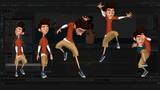
The lessons continue with a demonstration of the various animation interfaces in Maya, detailing how to create a simple walk cycle for a robot and showing how to edit the animation in the Dope Sheet, Graph Editor, and Time Editor. Eric then reveals how to use Maya’s MASH animation system to generate a line of marching ants and covers the basics of Maya Paint Effects, the procedural modeling and animation tool.
This final volume finishes with a comprehensive demonstration of animating cameras, adding rendering post-process effects, and setting up a batch render for Arnold of the cafe scene used throughout this series.
By completing this volume, artists will have a strong understanding of how Maya works, how to create models and materials, and how to leverage its powerful animation and rendering tools. Included with this workshop are helpful Maya project files for artists to follow along with Eric’s lessons.
Watch Volume 1: Beginner’s Guide to Getting Started in Maya
Watch Volume 2: Beginner’s Guide to Modeling & Animation Workflows
20 Lessons
Eric Keller’s workshop for Volume 3 builds a strong foundation in Maya's core artistic tools, covering the essential workflows from UV mapping and texturing to lighting, animation, and final rendering. By the end, artists gain practical experience with the professional pipeline and learn to combine modeling, materials, animation, and rendering tools effectively. This volume bridges basic Maya knowledge and professional production workflows.
Duration: 2m 35s

In this lesson, artists build a foundational understanding of UV texture coordinate editing in Maya 2026. While the lesson focuses on fundamental operations like automatic mapping and shell stitching, it prepares artists for more advanced UV editing. Eric emphasizes the effective UV layout strategies that prepare artists for working on games, films, or other applications.
Duration: 15m 1s

UV texture mapping is an essential skill in 3D modeling. Well-made UVs improve the texturing, grooming, and rendering process, and mastering Maya's UV Toolkit provides a solid foundation for professional environments. The consistent texel density and organized shell layout created in this lesson simplify texturing in subsequent steps.
Duration: 16m 59s

This lesson establishes Arnold as the preferred rendering solution for professional-quality images. Eric provides a solid foundation for the rendering interface while focusing on practical considerations such as file organization and hardware optimization. This helps artists create high-quality still renders and prepares them for advanced lighting and shading.
Duration: 9m 17s

Eric covers the foundation for modern lighting and shading workflows using Arnold and OpenPBR materials. The new OpenPBR system makes materials predictable and consistent across different lighting conditions. Combining HDRI dome lighting with preset-based material assignment creates an efficient workflow for achieving photorealistic results.
Duration: 10m 39s

This lesson provides a comprehensive introduction to the Hypershade interface and material creation workflow. Eric demonstrates practical techniques for building realistic shading networks. This foundation prepares artists to create complex materials by showing how different nodes connect and interact.
Duration: 17m 48s

Shader creation combines art and science, requiring patience and experimentation. Eric demonstrates that achieving convincing materials involves adjusting parameters until the right combination is found. Artists will develop realistic shading skills through experience with the tools and a willingness to experiment.
Duration: 17m 14s

This lesson provides valuable workflow optimization techniques for material artists. Eric demonstrates how to speed up the shading process with organizational tools such as Bins, preset blending, and the power of Substance integration. With these methods, artists can maintain organized scenes while utilizing extensive material libraries for efficient custom material creation.
Duration: 13m 59s

Eric covers the essential foundations for lighting workflows in Maya with Arnold. He demonstrates that artists achieve effective lighting by understanding the physical properties of light types and choosing appropriate decay settings for realistic results.
Duration: 13m 49s

In this lesson, artists learn the transition from traditional Maya lighting to Arnold-based lighting for physically accurate results. Eric demonstrates that Arnold's lighting system offers superior quality and features like mesh lights and HDRI environment lighting. Mastering these techniques is essential for modern 3D rendering workflows.
Duration: 13m 38s

Arnold's advanced lighting tools provide powerful ways to create atmospheric lighting effects. Artists learn how to use physically accurate photometric lights, procedural sky systems, and atmospheric effects for architectural visualization and cinematic lighting. These techniques enhance the realism and mood of rendered scenes.
Duration: 15m 39s

In this lesson, Eric breaks down the essential foundation for animation through a practical walk cycle example. He emphasizes mastering fundamental tools such as keyframes, Auto Key, and the Channel Box. Learning these basic concepts allows artists to efficiently create character animations and prepares them for more advanced tools.
Duration: 11m 57s

This lesson demonstrates essential keyframe editing workflows that improve animation efficiency. Artists use timeline editing and the dope sheet to refine timing, clean up keyframes, and manage complex animations. These techniques provide the foundation for advanced animation editing using the Graph Editor.
Duration: 12m 36s

The Graph Editor serves as the primary interface for refining animation timing and creating polished motion. Mastering the Graph Editor's toolset requires practice. Eric highlights that artists use these curve-editing capabilities to add personality and depth to character movements.
Duration: 16m 31s

The Time Editor and Animation Layers let artists experiment with timing and secondary motion without affecting the original animation. Understanding these basics enables flexible workflows where artists can quickly create rough animations and then refine timing without rebuilding from scratch.
Duration: 18m 20s

MASH's node-based system allows artists to create sophisticated motion graphics quickly. The marching ants effect demonstrates how layering procedural nodes achieves complex motion that would otherwise take considerable time. Artists learn how MASH can be an efficient tool for creative animation through its modular node types.
Duration: 12m 40s

Paint Effects helps artists quickly generate organic elements such as plants and simple fur. It offers an accessible starting point for procedural organic modeling. Artists will understand how it integrates with Maya's animation system, allowing elements to deform with rigged surfaces while maintaining procedural animation.
Duration: 23m 4s

This lesson demonstrates that successful camera animation relies on technique and restraint. By mastering keyframe timing, arc creation, and workflow organization, artists can create professional camera movements that enhance the subject matter.
Duration: 13m 20s

This lesson shows artists how to enhance 3D renders with depth of field and post-processing. The interactive focus distance setup eliminates manual trial-and-error, while the imager system provides post-processing options directly within the renderer. These techniques improve the visual interest and quality of still images and animations.
Duration: 17m 47s

In this final lesson, Eric provides an overview of batch rendering using Arnold. While Arnold produces high-quality results, Eric notes that many studios are moving toward real-time solutions such as Unreal Engine. The skills artists learn in Maya, particularly modeling, texturing, and animation, can transfer directly to these emerging pipelines.
Duration: 11m 24s

Primary tools
For this workshop you’ll need:


