
 Photoshop
 Maya
Maya ZBrush
 Substance Painter
 Blender
 Unreal Engine
 Arnold
 Nuke
Nuke KeyShot
 V-Ray
V-Ray Marmoset Toolbag
 Mari
Mari Marvelous Designer
 Substance Designer
 3ds Max
 3DCoat
 Redshift
 Faceform Wrap
 Lightroom
 After Effects
 OctaneRender
 SpeedTree
 Daz 3D
 Agisoft Metashape
 Fusion
 Modo
Modo RealityCapture
 Gaea
Gaea Cinema 4D
 Gravity Sketch
 Premiere
 Procreate
 Clip Studio Paint
 SketchUp
 SketchBook
 Katana
 Natron
 Mudbox
 Quixel Bridge
 Quixel Megascans
 Quixel Mixer
 Substance 3D Modeler
 World Creator
 Yeti
Yeti Ziva VFX
 Mixamo
 Adobe Medium
 Quixel DDO
 xNormal
 Meshmixer
 Storyboard Pro
 DaVinci Resolve
 TreeIt
 World Machine
 Gaffer
 Corel Painter
 SynthEyes
 Krita
Krita Massive
 Materialize
 Unity
Unity Ornatrix
 PreForm
 Moi 3D
 animBot
 QuickTime
 ReCap
ReCap






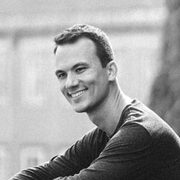






Danny Barnhart cracks open his simulation secrets with a close look at how to create fizzy fluids in Houdini. Using a champagne flute and a bubbly liquid for this beginner- and intermediate-level demonstration, Danny walks through the entire process of simulating a champagne pour, from the initial setup of the fluid emitter to the final lighting and rendering. The workshop aims to familiarize artists with Houdini’s FLIP Solver as well as instructing how to work with particles to create believable motion.
Starting out with Houdini’s Shelf tools, this 3-hour workshop begins with how to create a simple setup of geometry emitting fluid into a glass object before diving into the simulation work. Danny then delves into creating custom attributes in Houdini to replicate the interaction between foams and liquids, and reveals how to use custom attributes to create differentiation in motion between liquid and foam particles as they interact.
Once the main simulation is cached out, the workshop moves into setting up the resulting foam particles for rendering and meshing the liquid simulation. Once the two main elements are set up, Danny walks through creating additional particle simulations for further bubble and fizz elements. When all of the elements are cached out, the training discusses basic lighting and shaders to render out a final simulation in Mantra, the highly advanced renderer included with Houdini.
6 Lessons
In this introductory lesson, Danny Barnhart establishes a foundation for complex fluid simulation, setting up geometry, collision objects, and simulation attributes. He demonstrates professional practices that will help eliminate unwanted results in later stages of the workshop, establishing proper scale, setting up an organized workflow, and enabling key attributes from the start.
Duration: 22m 58s

In this lesson, Danny demonstrates that realistic fluid simulations requires a combination of proper reference study, careful attribute tuning, and strategic post-processing. By separating foam and fluid into distinct groups, artists can achieve convincing champagne behavior without high computational cost. This workflow emphasizes iteration and adjustment of multiple interconnected parameters, showing that successful simulations require both technical understanding and artistic refinement.
Duration: 43m 8s

In this lesson, Danny demonstrates how to convert the simulation foam points to render-ready geometry, separating large and small bubbles based on their visibility. Using the power law distribution for size variation and VDB smoothing for natural bubble intersections creates a realistic foam structure that matches real-world references. Applying proper organization, attribute preservation, and caching strategies to maintain efficiency in the rendering pipeline sets up the foundation for liquid meshing and additional simulations covered in the later lessons.
Duration: 26m 3s

This lesson demonstrates the technical pipeline for converting simulated liquid points into production-ready geometry. This process allows the simulation to be maintained through attribute transfer, in turn, solving geometric intersection issues with the help of Boolean operations, and creating believable secondary effects through carefully controlled particle systems. By combining these techniques, artists can achieve a realistic carbonated liquid ready for final rendering.
Duration: 31m 11s

This lesson demonstrates an approach to creating secondary bubble elements for the fluid simulation, emphasizing the importance of proper sourcing, collisions, and geometric clipping operations. These structures allow for a procedural workflow while ensuring bubbles behave realistically: appearing only where liquid exists, moving with organic turbulence, and conforming to the container’s geometry. With all simulation elements cached, the next phase will focus on shader setup, lighting, and final rendering of the complete pour effect.
Duration: 30m 12s

This lesson demonstrates the workflow for shader development and final rendering of the photorealistic champagne simulation. Some of the most important takeaways are the importance of layering multiple specialized elements with carefully crafted materials, and leveraging simulation data to drive shader parameters for enhanced realism. Danny provides practical solutions to common rendering challenges and optimization strategies that can be applied to similar fluid simulation projects, revealing that sometimes breaking the rules of physics can produce more visually appealing results rather than committing to strict physical accuracy.
Duration: 32m 8s

Primary tools
For this workshop you’ll need:

* Note that these programs and materials will not be supplied with the course.
Project Files
This workshop provides artists with access to Danny Barnhart's geometry file. Inside the download, you'll find:
- Glass reference model (.bgeo.sc) – A Houdini geo file of the glass model for liquid simulation and collision
- The instructor has provided the geometry file to make it easier to follow along with the workshop. –
Skills Covered
Who’s this Workshop for?
This workshop is designed for beginner to intermediate-level VFX artists looking to master fluid simulations in Houdini. Artists with a level of experience who are looking to expand their simulation toolkit will find this training particularly valuable for developing production-ready skills.
Game developers, technical artists, and 3D generalists will also benefit significantly from this approach to FLIP simulation workflows. The workshop provides essential knowledge for anyone wanting to create convincing liquid effects and particle interactions.
Learning Outcomes
By completing this workshop, artists will gain comprehensive knowledge of Houdini's FLIP solver and particle systems for creating realistic fizzy liquid simulations.
Key skills include:
- How to set up fluid emitters and collision geometry using Houdini's Shelf tools.
- How to configure and control FLIP solver parameters for realistic liquid behavior.
- How to create custom attributes for differentiating foam and liquid particle motion.
- How to mesh liquid simulations and prepare foam particles for final rendering.
- How to generate additional bubble and fizz elements using secondary particle simulations.
- How to cache simulation data efficiently for production workflows and asset management.
- How to apply basic lighting setups and shaders for rendering in Mantra.


